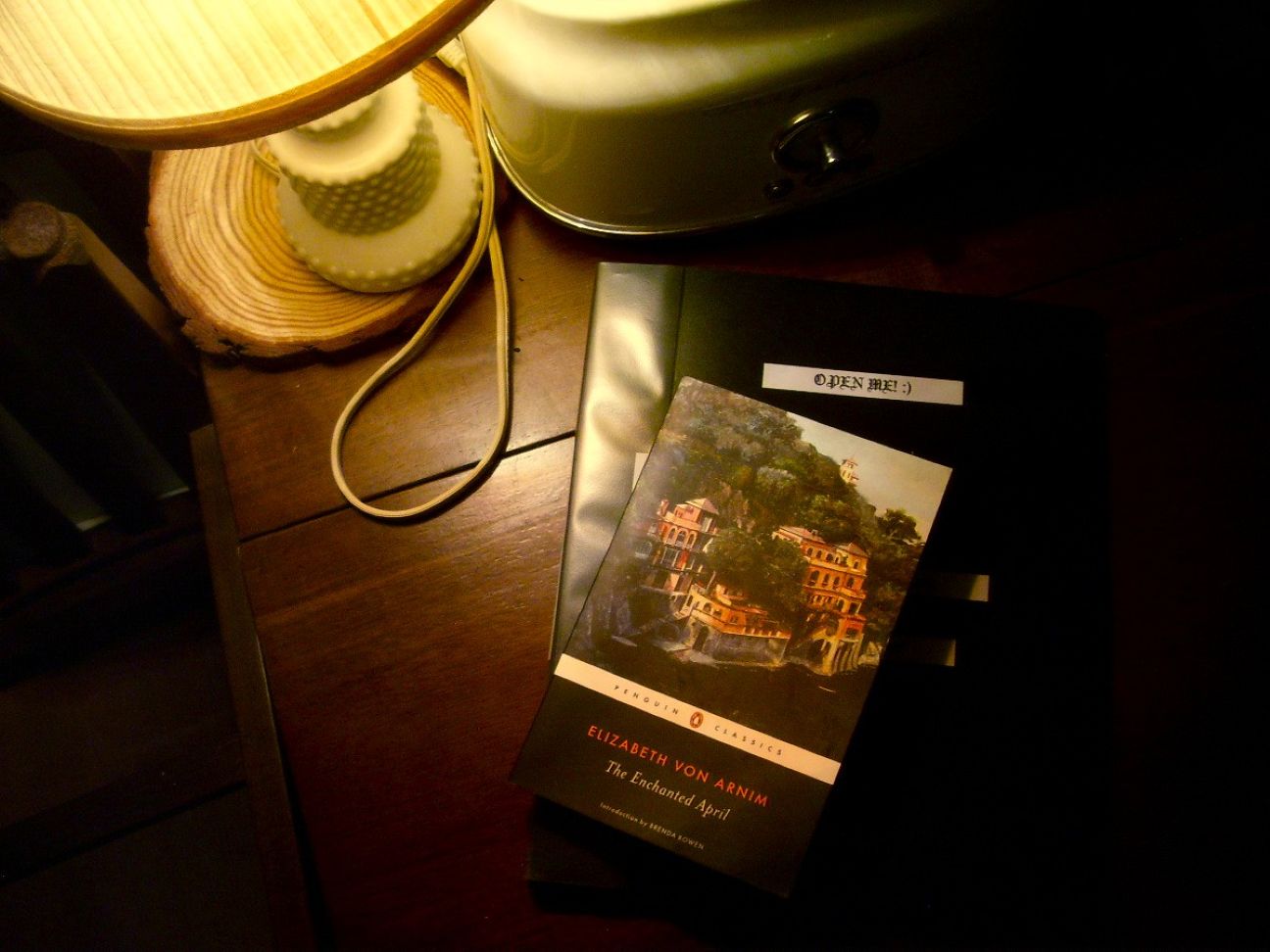
There are men in this fucking story where there really really should not be.
This is a holiday for women to find themselves. For them to bond. Isn’t it? And we get so close and then they are pulled away by the stupid husbands they invite. It’s actively painful to witness the mess that becomes of this book. Lovely ideas of getting in touch with oneself and living fully for oneself, and immediately it is done away as they invite men back into the story and the book becomes about the importance of a having a holiday every now and again. The theme switches when it could have been far stronger and I hate the weak message we end up with.
And let Scrap fucking live!
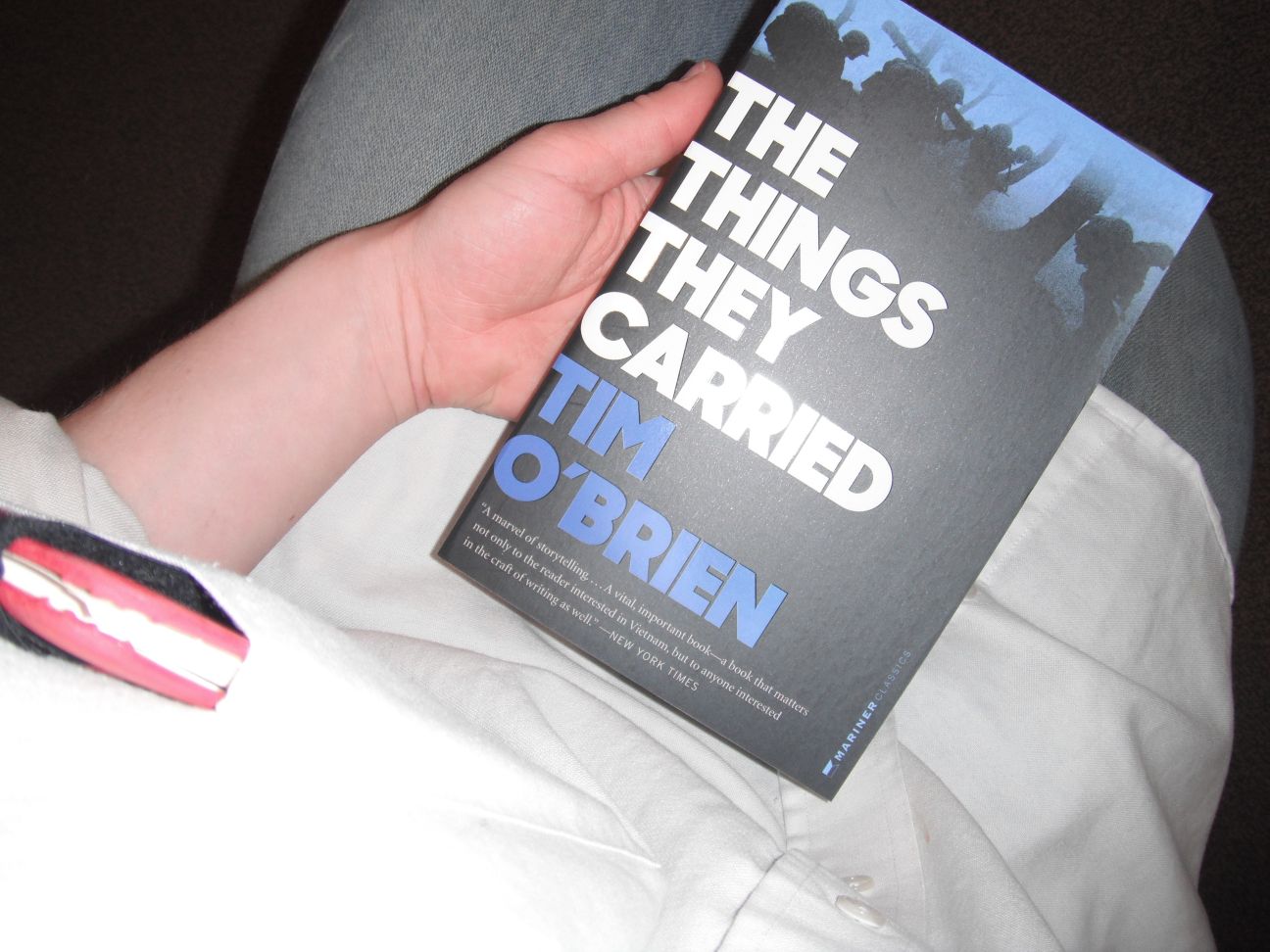
The AP Eng Lang book that changed my life! That I still reference constantly, and that, of course, holds up.
It’s a book about writing disguised as a book about war. Life is war, and so it is entirely relatable.
“A thing may happen and be a total lie, and another thing may not happen and be truer than the truth.”
Story truth and happening truth. The line between real truth and personal, story truth is blurry and unnecessary. What you feel can be realer to you than what really happened.
The theme comes out in every story uniquely. Rat Kiley letter specifically good — making up big stories about dead brother to sister back home because it captures the idea of the person and the ways the troops saw him and it’ll be more truthful than anything for that sister.
My favorites are Sweetheart of the Song Tra Bond and Norman’s story. His especially because of how we read it, and then read the process of writing it.
Tim you fucking hero.
Happy 100 books to me since I decided to start reading more intensely a couple years ago :)

The ones who have more joy win! This is kinda just Braiding Sweetgrass short version. Honorable harvest how to. Scarcity is not a natural thing, it was created by economists and marketers to do an evil money trick on us.

I’m really glad the hold time for this book was so long. I’m glad people are reading it. I’m glad it was written.
Makes me question any YouTuber who hasn’t pivoted into using their platform for educational good. This is the way to grow up, the way to use your megaphone. “Hey world, care about this” and “Here’s why”. I appreciate the journalistic research, the human anecdotal evidence, and the data. I think this works as a broad introduction to get people my age to care about global health.
“For centuries, the disease has used social forces and prejudice to thrive wherever power systems devalue human lives.”
“Where are we putting our public money?” Is not a question I have considered until recently - and I feel more than ever that visibility is key for issues like these. If we can’t see the issue, the issue doesn’t exist.
We aren’t in Sierra Leone, he’s bringing that place to us. And he does a very good job at writing about it from a very neutral place, I didn’t sense any bias whatsoever.
Influencer fixation turned influence, classic and natural and well executed. Pretty epic of you John.
I learned a lot. Curious to read more about the history (influence in fashion and romanticism about mental health).
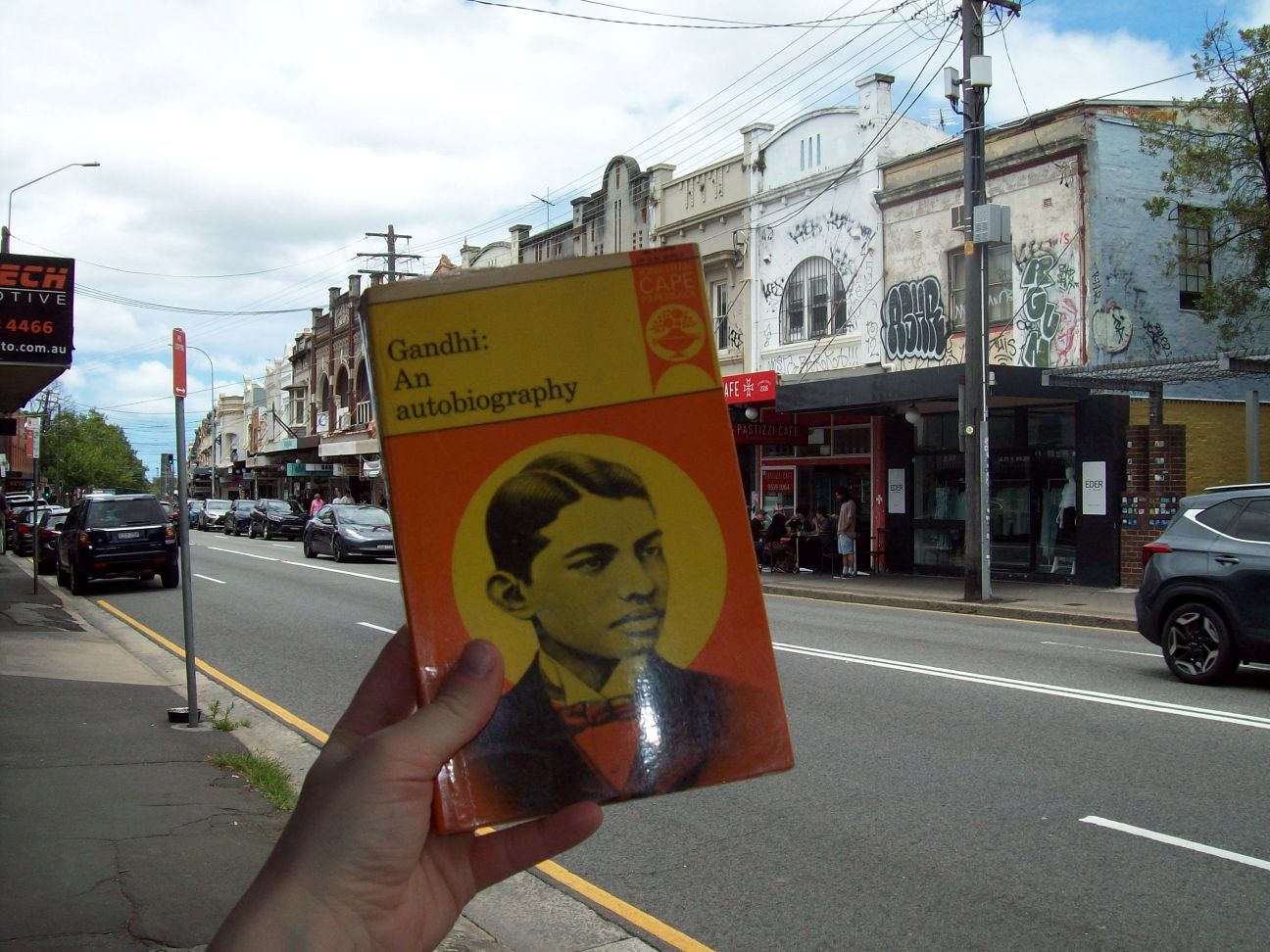
When talking about community, you’d be hard pressed to find a more relevant person to study. Politics, people, religion - it’s all Gandhi traversing the same playspace of how to facilitate a good peaceful community. For someone largely unaware of the politics, people, and religion, I was still able to find meaning and relatability in Gandhi’s struggle to find truth through removing desires like food, ownership of riches, and boundaries between yourself and others.
Above all, Gandhi argues for knowing oneself through constant change to find one’s truest form.
The month it took me to read this, I was couch surfing in December. Cold, confused. Constantly out of place, constantly trying to find comfort, and rapidly changing each day as I adjusted to what the new normal seemed to be. My body was changing as rapidly as my mindset. Taking long walks or bus rides with Gandhi was one of the largest comforts of the month as he understands how vital change is for growth - misplacing yourself purposefully being the hardest thing to do, but once out of place, that is where you find yourself most largely changed. Crossing the boundary (discomfort) as the only way to see the boundary as it is. I saw the way I have lived in new light again and again: how important my food was to me, how important a comfortable space was, how independently self sufficient and refusing help I really should be, etc etc. How important trust is. And now that I’ve seen those boundaries that defined me, I feel most able to work on them and better myself. Or “find my truest form.” Rephrasing boundaries as opportunities for growth. Challenges within me. Working on my binaries so that I can find what is really most valuable to me: bettering my community. The only way to grow is to change.
I ate a lot in December - I track my calories constantly but don’t restrict - eating when I feel hungry. So I know I ate a lot more than normal. I changed my diet to remove processed sugars and grains this season - the objects of desire, we could call them - and so felt largely proud of all I ate as fuel rather than as craving. To allow myself to gain weight is entirely new in addition to diet change - and it is something I have been terrified of a long time. But I found myself gaining muscle more than anything as the hunger came from long periods of strenuous work. And found my metabolism changing too - along with that hard work. I find myself enjoying greatly both the process of eating and the feeling of getting stronger. Not something I could have allowed myself without crossing the boundary of calorie restriction and fear of weight gain. Gandhi, too, focuses greatly on diet in this book as a way to remove passion/desire from one’s life and find one’s truest happiest purest form, and it was nice to hear his thoughts on eating relate to my own. Food as fuel, not as desire.
I am not a homebody, but a bed that is mine is sacred to me. To be removed from a living space that is mine - from my objects - I found how little I really needed so much that I owned. I lived out of a suitcase the entirety of the month and found it preferable to choosing new clothes every day and being muddied by distracting objects. It helped me adapt and cut down on wasted time. I kept a pair of gym shorts in my bag at all times, and wore only sport bras so if I needed the gym after work, I could head right there. Often I did, because the place I was staying wasn’t accessible at all hours. I found I could sleep well in new places so long as I was dead tired, and I was, most days, as I was coming back from new physical work I was enjoying. It was uncomfortable learning to adapt, but I found I cared less and less about routine, and enjoyed adapting and learning about the new homes I was crashing in. Pressure I felt to be polite started to fade and my relationships to the friends who housed me became more comfortable and real. My clothing has always been important to me, I like to dress nicely. To be in stained clothing days and days in a row without access to a laundry machine was harrowing. Walking onto the bus or into cafes or bars to get a drink of water as I did covered in fruit and chicken juice, wet with Seattle winter rain. Sticky gloves. I was disgusting. That insecurity goes. I’m proud of the clothes I have stained, I’m proud of the work I get to do instead. The work the stains resemble. In these instances I am reminded of Gandhi’s desires for the gold watch, for riches, and for nice clothing that slowly fade as he gives up all of himself to the public good. Shedding comfort and ease and collection of objects for humility and presentation of one’s truest self. Putting the mind above the terrestrial plane. And relishing that as valid and true.
And the list goes on.
- My relationship to my phone changed as it died so often I couldn’t rely on it - so I started bringing cassette players around for music and enjoyed that immensely. Books, scraps of paper, my little camera - vessels for art and thought in a new form.
- Purging friends who weren’t there for me as I saw them seeing me at my lowest and ignoring me. More and more finding myself drawn to the people who really care - seeing people for who they are. Trusting the folks who showed up.
- Purging TV, video games, movies, parties, social gatherings, etc for work. Finding the most joy in working at something I enjoy - and why not spend my life doing what I enjoy rather than distracting myself in a semblance of polite “work life balance”? (Aside: my friend time is still important to me. Rest is important, perspective is important). They are just distractions to the mind as much as anything else. They don’t feel as fun now that I have work I like.
The very hardest to grasp has been tearing down what makes me: hard, rigid, independent Violet into a vehicle that services the community above myself. This is where the serious growth begins and where Gandhi is far and away ahead of where I may ever be. “Reduce yourself to 0. You must put yourself last amongst all creatures.“
This is to purely and truly serve ALL. But I began to work on this this month, I think. Removing my boundaries with allowing people to show me affection. Allowing myself to be loved and taken care of so that I may continue to service my community. I found myself at incredible lows this December - unable to walk up the stairs to my apartment from lack of strength, unable to afford food despite being so hungry, crying in the front yard over oranges - unable to lift another box. And to push myself forward knowing my work was worthy, I was forced to accept help from those around me despite my great independence, my want to solve my problems all by myself. PRIDE. How much kindness can I accept? When they let me sleep in their bed, eat their food, borrow their things. Take a bag for me and help me up to the apartment. Offer me a home cooked meal late at night. Lift the box of oranges where I need it to be. On and on and on. It extends to my newfound relationship with leadership. How can I lead without trusting others to take over what I selfishly want to do? What is delegating and what is allowing others to do the job better than I could? Faith in another’s abilities, allowing them to take over when I am weakest, allowing others to grow - this is true leadership. Gandhi knows that to accept help is part of allowing humility. To be your truest most effective person, you must connect with others who will pick you up when you cannot. Who will help you, and the work, keep going.
My relationship with trust, both of myself and what I’m capable of, alongside trusting others to take care of me as I had no other options than to accept their shelter and food and water and love has radically changed this December. Could only come with crossing the boundary into unhousedness, into entrepreneurship, into a new lifestyle. And in this way I found myself living more truthfully.
Gandhi, thank you for our long walks. Listening to his autobiography was the closest I will ever get to a conversation with Gandhi. His ideas live on, and that’s a beautiful thing for me to be able to have regardless of how boring he is.
I am growing into a new body on my quest for truth. I am becoming a monster (and I find such delirious pride in it). I like your vows Gandhi, and I’m taking some of my own.

Why:
If you look after community, community will look after you!
To be authentic (truthful might be the better word) is to be free
I want the food we eat to be honored - especially animal products.
I don’t like the world and want to be myself in a world I like.
I want to see change.
Contexts:
- I hate food waste.
- I am young and want to do something with my life.
- I feel confident enough to know I can do what I put my mind to.
- I am broke.
- I want to make friends!
- I’m horrified by the mass detachment from what seems to really matter.
The lists goes on, I would put my whole life in this contexts section.
Contexts:
- My whole life
So, now I’ve started with my Why’s.
I have had this theory on life for a long while now that I think came naturally through going to school for writing. That being: everyone in life has a thesis - a central argument. The thing they stand for, the core of their artistic work, their drive, their purpose. What are you arguing in life? Why do you live?
Why?
This book has given me much better language to talk about this idea. Not only that, but this provides context and evidence and analysis for my little pet theory of life. It establishes it, and has indoctrinated me.
I’d argue a majority of this is my man Simon repeating the same thing with different evidence/different contexts, but damn I was still eating up every word.
Here are my notes on the MOST stand out advice and topics that touched me in no particular order. Just the kind of takeaways that are so important I feel inclined to keep them somewhere I can find them without rereading the book in its entirety:
Every leader should know why they’re doing what they’re doing. Every politician should know why they are in office. Every company owner should know why their company exists and therefore why their workers should come to work. Everything starts with: why are you doing this?
Leaders don’t have followers, they have people who are inspired. Followers trust a leader because they share values, so the leader will make decisions based on said values.
“People don’t buy what you do, they buy why you do it”
Winning hearts vs winning minds. You can rationale your way into any consumer product, but to gain a loyal customer, you must appeal to them personally.
Authenticity is when everything you say and everything you do is truthful and adheres to your why question. Thus everything you say and everything you do, you actually believe.
You don’t love building a wall of stone, you love building the cathedral.
People with a clear sense of why (drive by a higher cause) tend to ignore their competition. People with a fuzzy sense of why are obsessed with what others are doing. When you compete against everyone else, nobody wants to help you. When you compete against yourself, everyone does.
To embody what you believe you have to believe in something. In reading this I allowed myself to dig into what my core is made of nowadays - and too allows for constant questioning of the changing substance of that core. This book helps you truly know yourself.
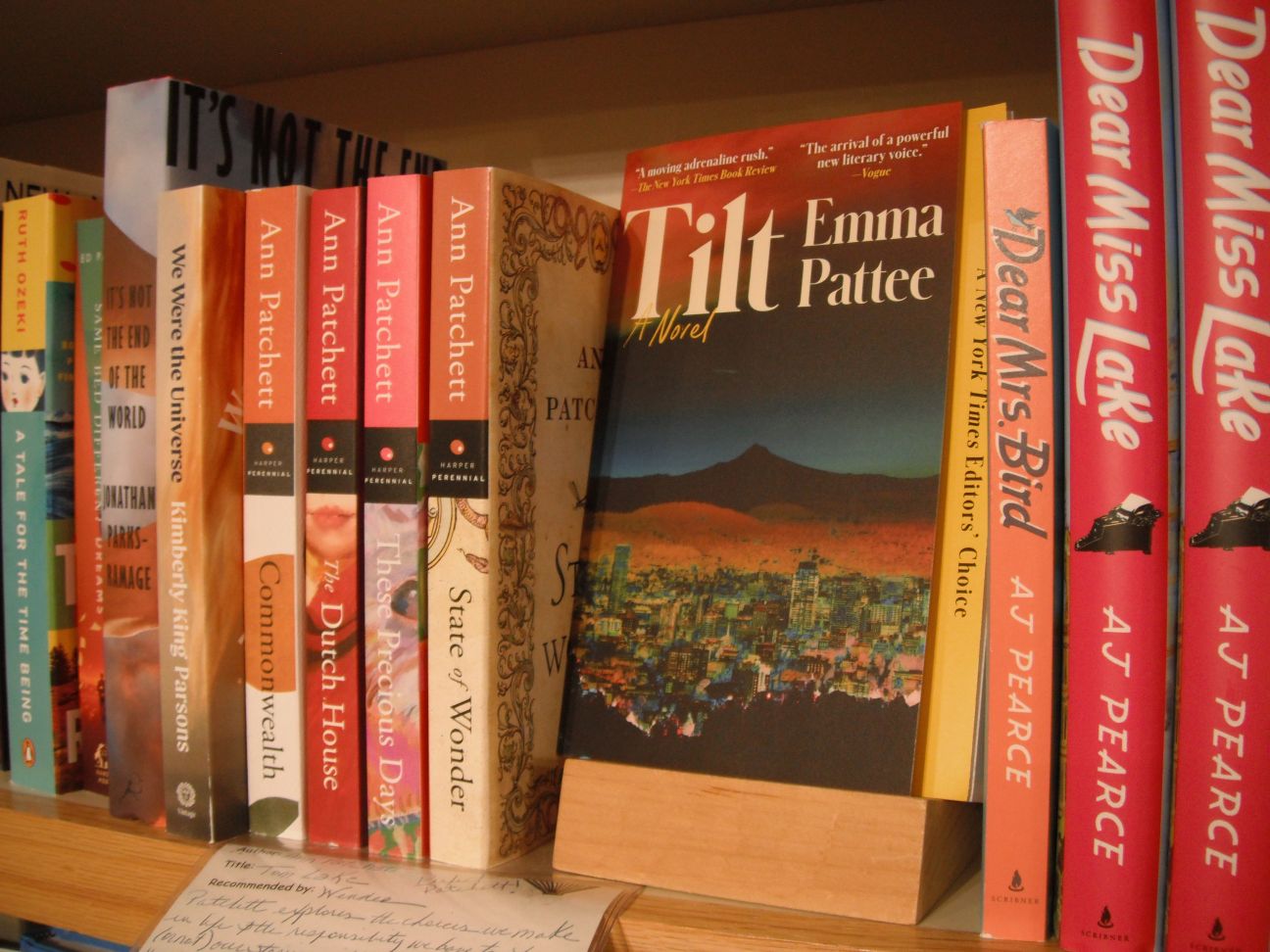
What makes this book pretty good is the main character is hateable in a way characters aren’t allowed to be hateable. And then they let her grow and change out of it!
She is so physically weak and anxious and represents who we have become as a society. Shes weak and shitty in a way you don’t often see women be weak and shitty because feminism doesn’t allow it for female protagonists - see “pregnant women are sacred” - uncritiquable (not a word but I need it here thank you) despite that aforementioned mental and physical weakness. But the author does critique it - she critiques our complaining society and Annie has to become stronger and grow rather than be allowed to stew as society seems to want. (How many times can I write society without being pretentious? I’ve reached the limit). She is strong in a way you never get to see because we’re all too afraid to say it. We don’t all have to be empathetic, we have to fucking grow the fuck up. It is both entirely unpolitical and political at once. I almost called this book red pill adjacent but really it’s just pro-humanity and the human condition of struggle.
Basically, this book brings really nicely into question all the absurdities of our daily life. How unfit for survival we have become through the stereotypical least fit for survival person - a pregnant lady.
She is so inept and annoying. She’s the kind of chronically online person who sees a beautiful city picture and tweets “never this pretty with the homeless population around!” Or some shit.
She lives to complain on reddit. She’s deeply anxious and only aware of it once forced out of her old life.
She radicalizes. She has the same thought I had at Amazon. Our body isn’t meant to hunch over computers - it is meant to survive, to bear children.
There’s a quote somewhere but I can’t find it. I have the audiobook. Sorry.
Nothing matters in the face of death.
Reddit doesn’t matter. Twitter doesn’t matter. Instagram doesn’t matter.
We are built to survive.
“You can withstand a minute of anything.”
We as a society have strayed from our survival roots. Her portrait of a man wandering the streets carrying his Xbox is horrifyingly realistic and relatable. He has a game he wants to finish before he dies and this is what is important to him in the apocalypse. In the long scope of all his life is.
A portrait of ourselves as weaklings.
Her best metaphor is the acting - her husband as an actor, playing out an idea of his life that is not truly his life. And yet though she critiques him, we are all actors these days. Acting - as a layer of performance rather than humanity.
Life has become a play of social media and jobs, and it’s not fulfilling as living for real.
The earthquake makes it real. Resets her, takes the stage away.
And so too does casting away social media, living for yourself. This lets her live life anew. Lets her be an animal again. Lets her know she is an animal. I loved her growl at the end, and her character change in that aggression. The difference between animals and man is animals do not know they are animals. In a way, our social media and societal cage traps us and makes us forget who we were as animals. To let it go is to radicalize and enlighten. To know we are animals, to accept it.
I both hated and adored it.
I found it relatable.
Post Amazon radicalization —> living completely on your own as an adult with no money radicalization.
I feel the animal struggle.
I feel the hunger in my ribs.
And in each throb of pain I feel, and that I must work to have money to heal, I lose touch with social media more and more. We change.